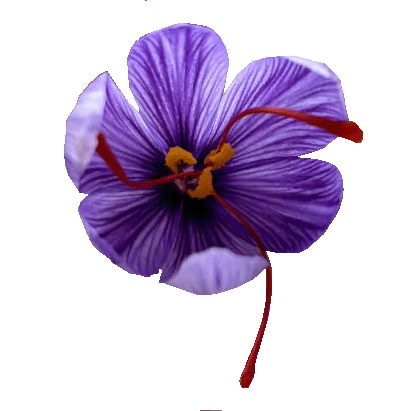
MAIN REASONS SAFFRON DOES NOT BLOOM IN INDOOR FARMING
1. Wrong Temperature During Flowering Stage
Saffron requires a strict different temperature cycle:
- Pre-flowering Stage
- Flower induction Stage
- Flowering Stage
If the temperature is too high or not stable, flower induction stops and no blooms appear.
2. Excess Humidity in the Room
Indoor rooms with AC often have High humidity, but saffron requires low humidity before flowering.
If humidity is high, the corm will:
✔ rot
✔ produce leaves but no flowers
✔ remain dormant
Ideal humidity required for blooming:
3. Light Exposure Problems
Saffron requires a dark period for flower induction.
If light leaks or improper lighting cycles are used:
❌ Flower formation stops
❌ Corms go into vegetative mode
4. Overwatering or Moisture in Corm
Indoor saffron should not be watered before flowering.
If watered too early:
- Flowers do not form
- Corm gets fungal infection
- Nutrients shift to leaves instead of flowers
5. Poor Quality Corms / Wrong Size
High-quality corms are the most important factor.
Problems when corms are:
- Below 20–25 grams
- Old or reused too many years
- Infected with fungus
- Not stored in correct conditions
Small or weak corms cannot produce flowers, even if conditions are perfect.
6. Wrong Storage Before Indoor Planting
Saffron needs 60–90 days of proper dry storage at:
- Good airflow
- Zero moisture
If storage is wrong, the corm’s flower embryo does not develop — so it will never bloom.
7. Insufficient Air Circulation
Closed indoor rooms without proper airflow cause:
- Ethylene gas buildup
- Fungal problems
- Stress to corm
- No flower development
Air circulation must be constant but gentle.
8. Corm Planting Depth Issues
If corms are buried too deep or packed too tight:
❌ Heat cannot escape
❌ Moisture accumulates
❌ Flower bud fails to grow
Saffron prefers shallow planting in indoor racks/trays.
9. Disease or Fungus
Fungal infections like:
- Fusarium
- Penicillium
- Rhizoctonia
These attack the corm internally and stop flowering even if the corm looks normal outside.
10. Nutrient Imbalance Before Storage
Corms require a healthy growing cycle in the previous year to generate a strong flower bud.
If nutrients were low last season, flowering will fail this season.
⭐ In summary:
Saffron does not bloom indoors mainly due to temperature mistakes, humidity issues, wrong corms, poor storage, overwatering, and light problems.